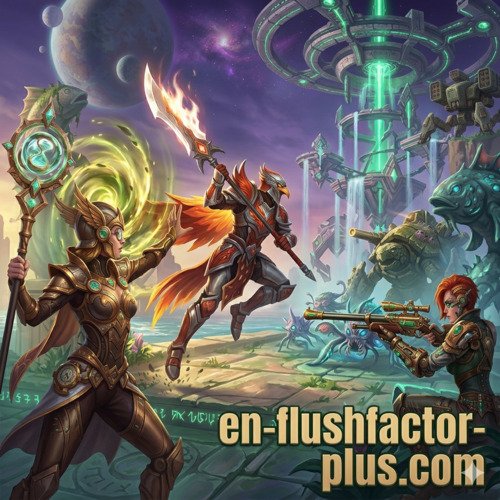
en-flushfactor-plus.com – Mobile Legends: Bang Bang has grown into one of the most competitive and dynamic multiplayer games in the world. One of the biggest reasons behind its popularity is the enormous variety of heroes available to players. Every hero possesses distinct strengths, weaknesses, and mechanics that create countless possibilities in every match. Because of this diversity, no two games are exactly alike, and players are constantly challenged to adapt their strategies and improve their understanding of the battlefield.
Although many newcomers focus on individual performance and mechanical skill, experienced players recognize that Mobile Legends is fundamentally a game of teamwork and strategic execution. Heroes are not designed to function in isolation. Instead, they form interconnected systems where each role complements the others. Understanding how heroes evolve throughout a match and how they interact with teammates is essential for long-term success.
Mastering heroes is not simply about memorizing skills or copying item builds. It involves understanding positioning, timing, rotations, and the importance of making decisions that benefit the entire team. These factors transform ordinary gameplay into a deeper strategic experience that rewards knowledge and discipline.
Hero Archetypes and Their Influence on Team Dynamics
Every hero in Mobile Legends belongs to an archetype that defines how they contribute to the overall team composition. These archetypes shape the flow of engagements and determine how teams approach different situations.
Frontline heroes are responsible for absorbing damage, initiating fights, and creating opportunities for teammates. Their durability allows them to withstand heavy attacks while protecting fragile allies from enemy threats.
These heroes often possess crowd control abilities that disrupt enemy formations and prevent opponents from executing their plans effectively. By controlling space and forcing enemies into uncomfortable positions, frontliners establish the foundation for successful engagements.
Playing a frontline hero requires patience and awareness. Entering a fight too early may leave teammates unable to follow up, while engaging too late can result in missed opportunities. Effective frontline players constantly assess enemy positioning and wait for the right moment to act.
Their importance extends beyond team fights. Frontliners are often responsible for providing vision, checking bushes, and escorting teammates safely through contested areas. Their influence is present throughout every stage of the game.
Burst Specialists and Target Elimination
Some heroes specialize in delivering explosive damage within a short period of time. These burst-oriented heroes excel at eliminating high-priority targets before enemies have an opportunity to react.
Such heroes are especially effective against fragile opponents who rely on positioning and sustained damage. Their mobility and high offensive potential allow them to create pressure across the map and punish careless movements.
However, burst specialists are often vulnerable when their abilities are unavailable. Timing and patience are therefore essential. Entering a fight too early or attacking the wrong target can lead to immediate punishment.
Successful players understand that eliminating the most dangerous enemy is often more valuable than chasing multiple kills. Precision and decision-making define the effectiveness of burst heroes.
Sustained Damage Dealers and Objective Pressure
Heroes focused on sustained damage excel during prolonged engagements and objective control. Their ability to continuously apply pressure makes them indispensable during tower sieges and large-scale battles.
Unlike burst heroes, sustained damage dealers rely on consistency rather than explosive attacks. Their strength increases significantly as the game progresses and they accumulate essential items.
Because these heroes are usually vulnerable to assassins and crowd control, positioning becomes a crucial aspect of gameplay. Remaining protected while maintaining offensive output requires careful movement and strong coordination with teammates.
Teams that effectively support their sustained damage dealers often dominate the later stages of the match. Their ability to destroy objectives and maintain pressure can gradually overwhelm opponents.
Adapting Strategies Throughout the Match
The effectiveness of heroes changes depending on the stage of the game. Recognizing these transitions allows players to adjust their priorities and maximize their impact.
The early stages of a match revolve around securing resources and gaining small advantages that can influence future outcomes. Heroes with strong early-game abilities attempt to pressure opponents and establish control over important areas of the map.
Farming efficiently remains one of the highest priorities during this phase. Players who manage resources effectively are better equipped to reach their power spikes and contribute to future engagements.
Map awareness is equally important. Overextending without information often results in unnecessary deaths that give opponents opportunities to gain momentum. Successful players balance aggression with caution and avoid taking unnecessary risks.
Even heroes that are weaker during the early game can remain relevant by focusing on efficient farming and maintaining safe positioning.
Rotational Play and Mid-Game Opportunities
As the game progresses, isolated laning becomes less important, and rotations begin to define the flow of the match. Teams that move efficiently across the map can create numerical advantages and secure objectives more consistently.
During this phase, coordination becomes increasingly important. Players must communicate effectively and respond quickly to changing situations. Heroes with mobility and crowd control often excel because they can influence multiple areas of the map.
Objective control takes precedence over unnecessary fights. Securing Turtle, destroying towers, and establishing vision provide long-term benefits that outweigh temporary kill advantages.
Understanding when to rotate and when to remain in lane is a skill developed through experience. Proper timing often determines which team gains control of the battlefield.
Late-Game Execution and Pressure Management
Late-game scenarios place enormous emphasis on discipline and decision-making. At this stage, heroes possess most of their core items, and damage output reaches extremely high levels.
One mistake can instantly decide the outcome of the game. As a result, players must prioritize positioning and avoid reckless aggression. Team fights become highly strategic, with every role carrying significant responsibilities.
Damage dealers focus on survival and consistent output, while frontliners create space and absorb pressure. Support heroes concentrate on protecting allies and disrupting enemy combinations.
Maintaining composure during tense situations often separates experienced players from less disciplined ones. Teams that remain patient and coordinate effectively usually emerge victorious.
Achieving a high level of performance requires more than understanding hero roles and game phases. Advanced concepts such as positioning, adaptability, and decision-making play equally important roles.
Positioning and Spatial Awareness
Positioning determines how effectively a hero can perform its intended role. Even powerful heroes become ineffective when placed in dangerous situations.
Players must constantly evaluate their surroundings and adjust their movements accordingly. Understanding enemy threat ranges and anticipating engagements help minimize unnecessary risks.
Spatial awareness also includes recognizing terrain advantages. Bushes, walls, and narrow pathways can dramatically influence the outcome of battles. Experienced players use these elements to gain favorable positions and create opportunities.
Strong positioning allows heroes to maximize their strengths while minimizing exposure to enemy attacks.
Adaptability and Dynamic Decision-Making
Every match presents unique challenges that require flexible thinking. Rigid strategies often fail because opponents continuously adjust their approaches.
Adapting item builds, changing priorities, and responding to enemy movements are essential aspects of advanced gameplay. Successful players evaluate situations carefully and modify their strategies based on current conditions.
Adaptability also involves recognizing when a plan is no longer effective. Sometimes retreating or changing objectives is more beneficial than forcing unfavorable engagements.
Players who embrace flexibility consistently perform better than those who rely solely on predetermined strategies.
Team Coordination and Collective Success
Despite the importance of individual skill, Mobile Legends remains a team-oriented game. Coordinated teams consistently outperform groups of players who focus exclusively on personal achievements.
Communication, timing, and trust are fundamental components of teamwork. Players who understand their responsibilities and cooperate effectively create stronger team dynamics and more reliable results.
Even simple actions such as providing vision, protecting allies, or responding to pings can significantly influence the outcome of a match. Team success is built upon countless small decisions that collectively shape the battlefield.
Understanding how to support teammates and contribute beyond personal statistics is one of the defining characteristics of experienced players.
Conclusion The Evolution of Mobile Legends Heroes: Playstyles, Team Strategies, and Mastering the Battlefield
Mobile Legends heroes offer far more than flashy abilities and exciting combat. They represent diverse playstyles and strategic possibilities that require understanding, adaptation, and teamwork. Every hero contributes to a larger system where cooperation and intelligent decision-making are often more important than individual brilliance.
From durable frontliners who control the battlefield to burst specialists who eliminate key targets and sustained damage dealers who dominate extended fights, each archetype plays a crucial role in shaping the outcome of a match. Learning how these heroes function across different stages of the game allows players to make smarter decisions and improve their overall performance.
Ultimately, mastering Mobile Legends heroes is a journey that goes beyond mechanics. It requires patience, awareness, and a willingness to adapt to constantly changing situations. Players who embrace these principles will not only achieve greater success but also gain a deeper appreciation for the strategic depth and teamwork that make Mobile Legends one of the most compelling competitive games in the modern gaming landscape.